Field Intelligence: Executive Summary
- Medieval Nilometers dictated tax rates based on flood levels.
- Higher floods drove higher capital generation.
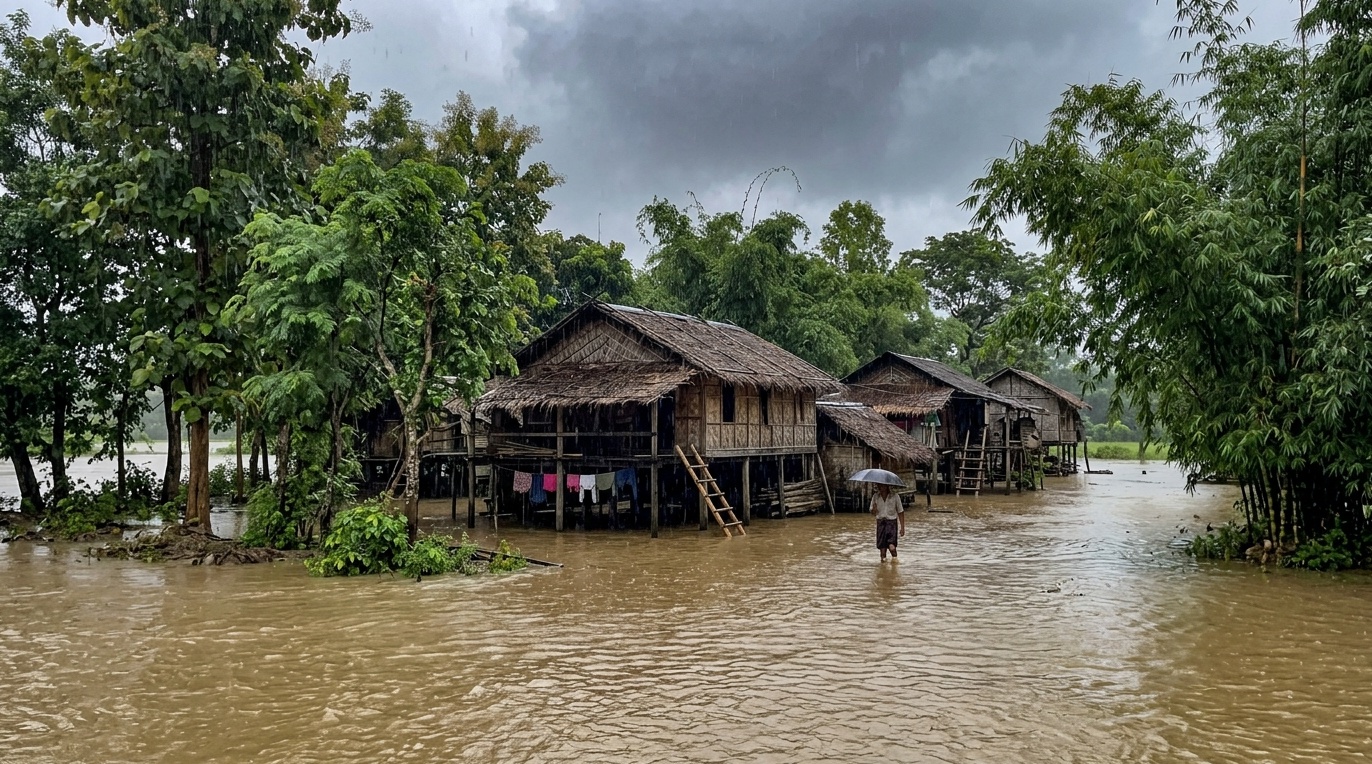
- Villages near the AyarWaddy River endure ceiling-height floods annually.
- These communities refuse to relocate to secure mountain terrain.
- The flooding acts as an aggressive nutrient injection. This eliminates fertilizer costs and maximizes agricultural yield.
Why Do Communities Endure Catastrophic Environmental Disruption?
Last night, we were studying the medieval Egyptian Nilometer. This was a specialized structure engineered to measure the Nile River’s annual inundation. The logic was ruthlessly mathematical. Higher water levels deposited richer silt. This drove larger harvests, which justified higher tax revenues. The ancient state understood a fundamental systemic correlation. The scale of the disruption dictates the scale of the yield.
This dynamic immediately brought us back to an encounter during our recent fieldwork near the AyarWaddy River in MoNyo Township.
The villages in this region are notoriously difficult environments to operate within. The demographic is heavily skewed toward those over fifty. The youth have been hollowed out by ongoing crisis and instability. The locals are hardened. They are tempered by a volatile ecosystem and carry a reputation for a short fuse. After witnessing their operational reality, we finally understand why.
These communities depend entirely on the AyarWaddy for their economic survival. They divide their labor between fishing and farming. Every monsoon season, they face catastrophic flooding.
How Does a Community Sustain Operations When the Ecosystem Actively Tries to Drown It?
We sat down with one of the village chiefs to understand their operational strategy. He described a localized crisis that defies modern risk management.
During peak floods, water levels breach the ceilings of their stilt houses. The entire family, alongside their remaining livestock, must evacuate to the roof. For anywhere from three to seven days, the village is entirely submerged. As far as the eye can see, there is nothing but water.
Looking at the secure mountain terrain less than thirty minutes away, we asked the logical follow-up. Why not simply relocate the village to higher ground?
His answer dismantled our modern bias.
Field Data Evidence: The Yield of Destruction "Every time we endure a massive flood, the water leaves behind an aggressive nutrient injection. We don't need to purchase or apply artificial fertilizers for the entire year. Whatever seed we throw into the ground comes back violently strong, yielding the highest agricultural returns in the region."
What is the "So What?" for Modern Liquidity Management?
These communities operate with complete agency over their geography. They execute a centuries-old operational strategy.
For generations, they have consciously traded acute, short-term systemic disruption for massive, sustained organic yields. Modern observers assume the flood only destroys infrastructure. In reality, the disaster serves as an unavoidable operational cost for an outsized return.
This is the exact same ancient wisdom underlying the Nilometer. True resilience requires structural weight. We must engineer our systems to capture the massive upside of the deluge. When external pressure peaks, it brings the capital required for future growth.
Frequently Asked Questions
What is the core lesson of the AyarWaddy floods? Short-term systemic disruption acts as an aggressive nutrient injection for long-term growth, eliminating operational costs like artificial fertilizers.
How does this apply to business strategy? Organizations must stop viewing crises purely as destructive events. We must build systems designed to capture the structural weight and capital generation opportunities that inevitably follow a massive disruption.