Field Intelligence: Executive Summary
- In the 1950s, companies like Procter & Gamble invested heavily in TV advertising, spending $30 million in 1954.
- By 2022, influencer marketing had grown to over $15 billion.
- In 2020, 91% of B2B and 86% of B2C marketers prioritized creating valuable, engaging content. This shift is critical for any effective last mile sales coaching program today.
"Just a quick reality check, some companies are still relying on outdated marketing concepts. It is time to adapt!"
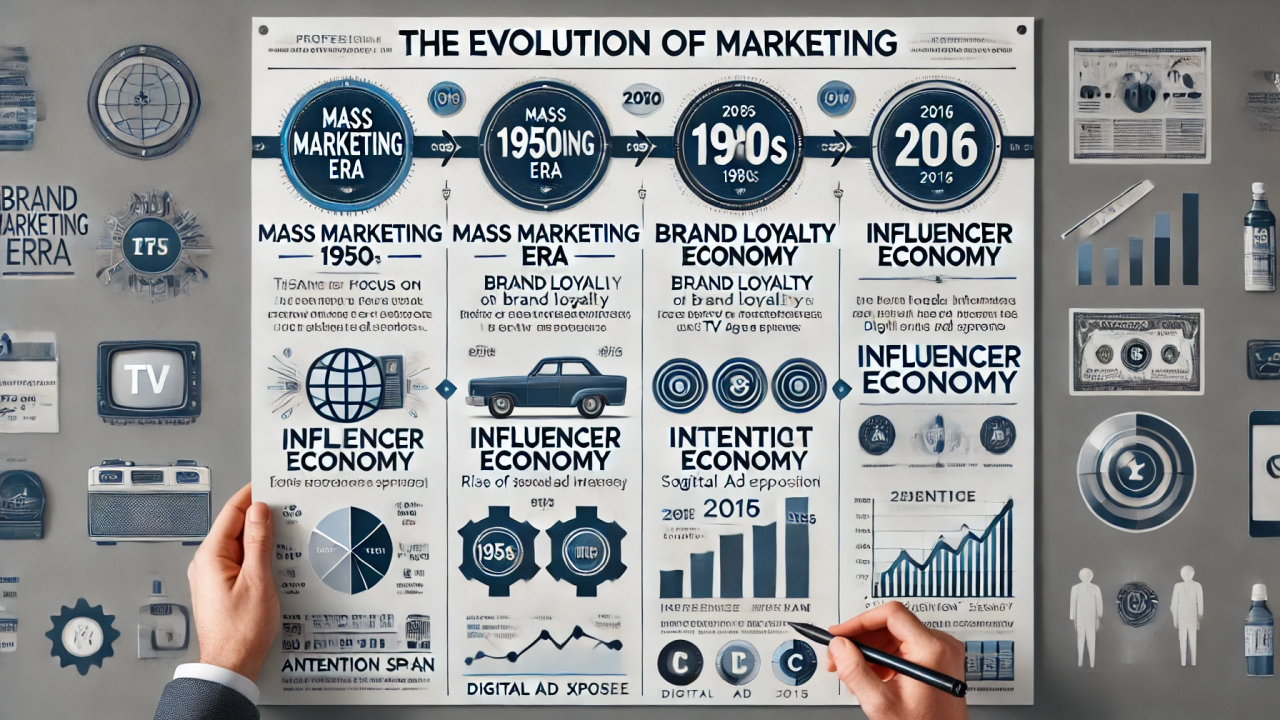
Marketing has always been about capturing attention, but how we achieve that has changed drastically over the decades. From the days of mass media to the current attention economy, marketing strategies have evolved with technology and culture. Let us explore this fascinating journey and what it means for sales coaching in the modern era.
How did marketing work in the Mass Marketing Era?
In the 1950s, television was king. Companies like Procter & Gamble poured resources into TV advertising, spending a staggering $30 million on ads in 1954, a monumental figure for its time. Before TV, radio and newspapers were the primary ways to reach audiences.
Field Data Evidence: A 1940 study showed radio reached 82% of U.S. households.
In fact, a 1940 study showed radio reached 82% of U.S. households, proving its unmatched influence. The big idea here: Marketing was all about casting a wide net, with one size fits all messages designed for mass appeal.
What was the focus of the Brand Loyalty Economy?
By the 1980s, the game shifted. Businesses began focusing on creating loyal customers who would stick with their brand. This is a foundational concept we teach today when delivering the best sales training in Myanmar.
Field Data Evidence: Research from the Strategic Planning Institute in 1983 revealed that companies with high brand loyalty enjoyed greater market share and profitability.
Research from the Strategic Planning Institute in 1983 revealed that companies with high brand loyalty enjoyed greater market share and profitability. Television still played a crucial role, with long term ad campaigns proving effective at building trust and recognition, as noted by A.C. Nielsen studies. The key takeaway: Brands began nurturing emotional connections with consumers, making loyalty the foundation of success.
How did the Influencer Economy change marketing?
Fast forward to 2016, and social media has transformed the marketing landscape. Influencers, everyday people with dedicated followings, became trusted voices for brands.
Field Data Evidence: A study found that 70% of teenage YouTube subscribers trusted influencer recommendations more than traditional celebrity endorsements.
A study found that 70% of teenage YouTube subscribers trusted influencer recommendations more than traditional celebrity endorsements. This shift fueled the rapid rise of influencer marketing, which grew from $1.7 billion in 2016 to over $15 billion by 2022. What changed? Consumers sought authenticity and relatability, driving brands to collaborate with influencers who felt "real."
What defines the current Attention Economy for Last Mile Sales Coaching?
Now, we live in the attention economy, where every second counts. If you are looking for the best sales training in SEA, grasping this concept is non-negotiable.
Field Data Evidence: A 2015 Microsoft study showed the average attention span dropped from 12 seconds in 2000 to just 8 seconds.
A 2015 Microsoft study showed the average attention span dropped from 12 seconds in 2000 to just 8 seconds, shorter than a goldfish!
Field Data Evidence: The average person sees 4,000 to 10,000 ads daily.
Meanwhile, the average person sees 4,000 to 10,000 ads daily. To cut through the noise, brands are leaning into content marketing and targeted last mile sales coaching.
Field Data Evidence: In 2020, 91% of B2B and 86% of B2C marketers prioritized creating valuable, engaging content.
In 2020, 91% of B2B and 86% of B2C marketers prioritized creating valuable, engaging content. In this era, we also see a surge in attention seeking content across platforms like TikTok and Instagram. From outlandish stunts to jaw dropping creativity, people are willing to do almost anything to grab attention. Customers are drawn to these moments of shock, humor, or authenticity, proving that in today's landscape, attention truly is the ultimate currency. The lesson here: You need to be sharp, relevant, and impactful to hold your audience's fleeting attention.
What does the future hold for marketing and B2B growth?
The evolution of marketing is far from over. With advancements in AI, immersive experiences, and hyper personalization, the next frontier will be about creating deeper connections while respecting people's time and attention.
Frequently Asked Questions
Q: How much did Procter & Gamble spend on TV ads in 1954? A: Procter & Gamble spent $30 million on TV ads in 1954.
Q: What percentage of teenage YouTube subscribers trust influencer recommendations more than celebrity endorsements? A: 70% of teenage YouTube subscribers trust influencer recommendations more than traditional celebrity endorsements.
Q: What was the average human attention span in 2015? A: The average attention span in 2015 was 8 seconds.
Q: How does this apply to last mile sales coaching? A: Capturing and maintaining attention is the first step in the field. The best sales training in Myanmar emphasizes connecting fast, delivering authentic value, and cutting through the noise.